In case you hadn’t heard, there’s a new IB Diploma psychology curriculum coming soon. All Year 1 Diploma psychology students will be studying it from September 2025. The new psychology guide won’t be published until Feb/March 2025, but teachers don’t need to wait till then to start preparing. The subject brief in the public area of the IB website can help you get started. Meanwhile, many of my blog posts between now and the publication of the new guide will be focused on helping you plan for this exciting change.
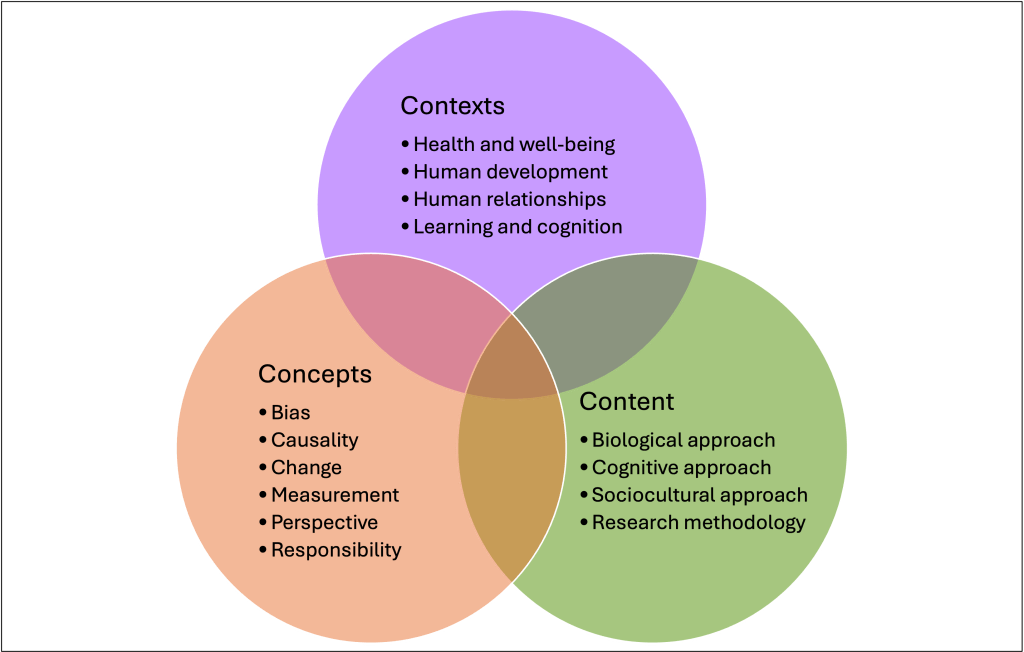
It is different from the current curriculum, with no need to memorise the details of studies, but an emphasis on understanding theories and the conceptual framework through which psychological approaches are applied in real-world settings. The best way to show this is through examples. Here’s one to get you started.
Question (modelled on typical question from Paper 1, Section C):
Psychologists studying human development face difficulties in measuring childhood development. Discuss the measurement of childhood development with reference to one or more stage theories and/or continuous models of development.
Context: Human development
Concept: Measurement
Content: Research methodology
Background preparation:
- Piaget’s three mountains task summarised in Psychology Today, with a useful references list at the end
- Gopnik’s work on scientific thinking in young children
- Shulz on the logical minds of babies
- ‘Lookit’ MIT lab website on their research into child development. See especially their left margin links to ethical and methodological issues.

Points to note:
- Focus on critical thinking and conceptual understanding right from the beginning, not study details.
- Make links to neuroplasticity and brain development and to Theory of Mind.
- Note where the questions sits, at the intersection of the three Cs.
- Key question suggestions:
- How has technology use changed the methodology of research into child development?
- Are there issues with construct validity when operationalising measures of cognitive development (i.e. looking time, preference in looking, verbal and physical responses)?
- Do the later findings completely undermine Piaget’s stage theory? Explain why/why not.
- What sort of task could you design to measure a 2-4 year-old’s ability to understand the thought of another?
- What are the ethical considerations with observing children? (The Association for the Teaching of Psychology (UK) has produced a useful guide to ethics for student research).
 Psychology Sorted